India
Telangana CM Revanth Reddy's remark on Ram and Shiva sparks BJP backlash
Telangana CM Revanth Reddy's off-the-cuff remark comparing BJP to 'Ram of the rich' drew BJP's ire. Union minister Sanjay Kumar Bandi accused him of dividing Hindu deities. Details on electoral roll revision remain unclear.
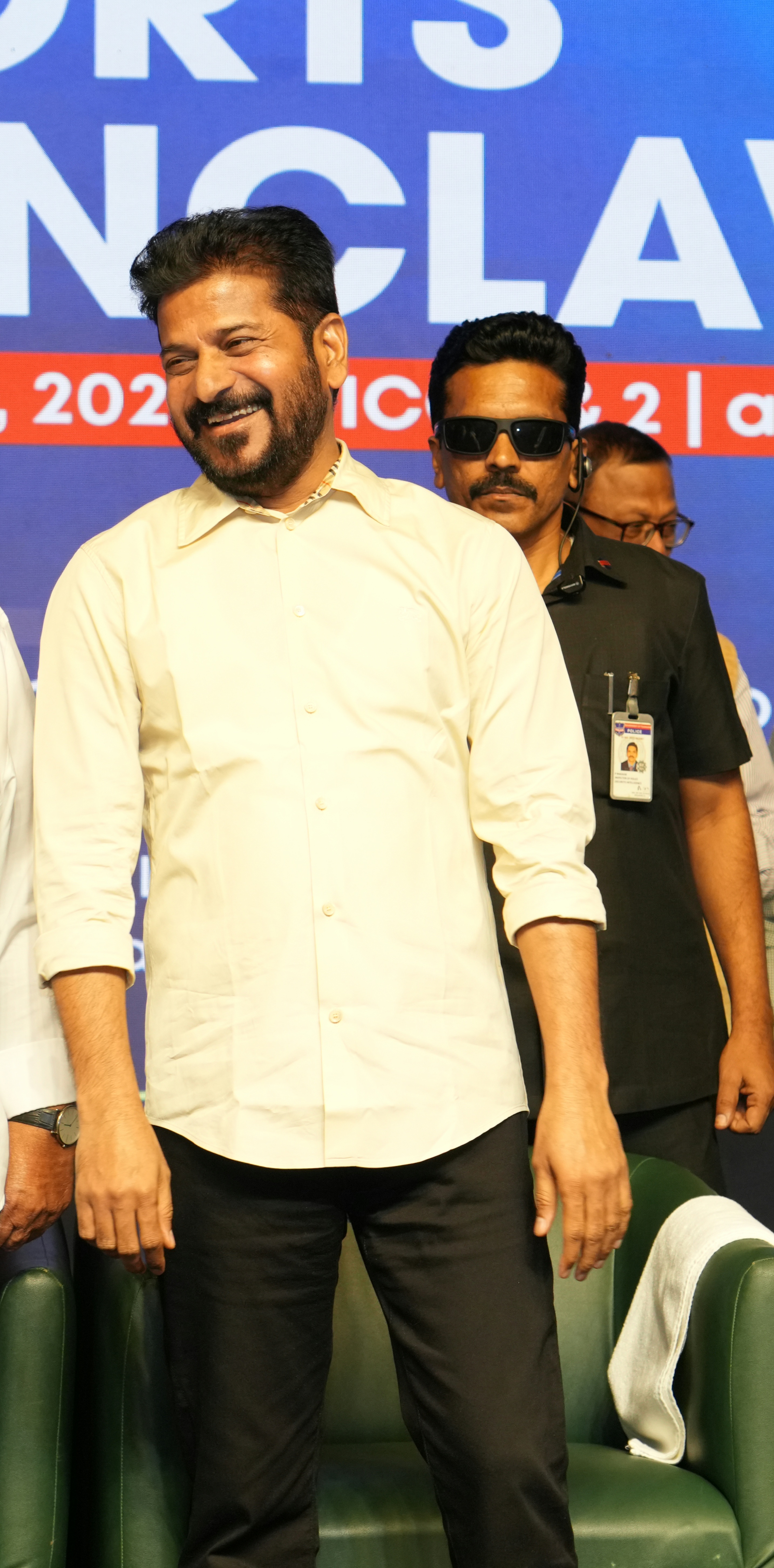

Telangana chief minister Revanth Reddy sparked controversy with an off-the-cuff remark during a public event, comparing the BJP to 'Ram of the rich' and the Congress to 'Shiva of the poor.' The comment, attributed to Reddy by news agency PTI, drew immediate backlash from BJP-aligned Union minister Sanjay Kumar Bandi. Bandi accused Reddy of creating political divisions between Lord Ram and Lord Shiva, a move he described as divisive and disrespectful to religious sentiments.
Reddy's remarks were part of a broader critique of the BJP's electoral success in North India, which he attributed to the party's alignment with 'the rich.' He also criticized the BJP for not using the traditional 'Har Har Mahadev' chant during public events, contrasting it with the frequent use of 'Jai Sri Ram.' Reddy's comments were made in the context of a discussion on electoral roll revisions, where he called for opposition unity against the proposed Special Intensive Revision (SIR) process, which he alleged was designed to 'delete votes and benefit the BJP.'
Bandi also highlighted Modi's association with Varanasi, where Kashi Vishwanath is located, and noted that Modi was the first prime minister since Independence to visit the Vemulawada Shri Rajarajeshwara Swamy temple, a site in Telangana. This contrast was used to underscore the perceived cultural and religious divide between North and South India.
Reddy's remarks were part of a larger political strategy, including his government's focus on education through initiatives like the Young India Skills University. However, the controversy over his religious commentary has overshadowed these efforts, drawing criticism from BJP leaders and raising questions about the politicization of religious symbols. The incident highlights the sensitivity of religious discourse in Indian politics, where leaders often navigate between cultural identity and political strategy.
The supplied evidence does not include a direct response from Revanth Reddy or the BJP to Bandi's accusations. This absence of a rebuttal or clarification leaves the controversy unresolved, with the public and media left to interpret the implications of Reddy's remarks. The debate over the religious symbolism of political parties continues to be a contentious issue, with leaders using such references to mobilize support and define ideological boundaries.
What remains unclear is the extent to which Reddy's remarks were intended as a political critique or a genuine expression of religious sentiment. The lack of context or clarification from Reddy or his party means that the remarks are open to interpretation.
The incident underscores the challenges of navigating religious and cultural identity in Indian politics, where leaders often use such references to appeal to specific voter bases. While Reddy's comments drew immediate criticism, they also reflect a broader trend of political leaders leveraging religious narratives to frame their agendas. The absence of a clear response from the BJP or Reddy's party means that the controversy remains a point of contention without resolution.